
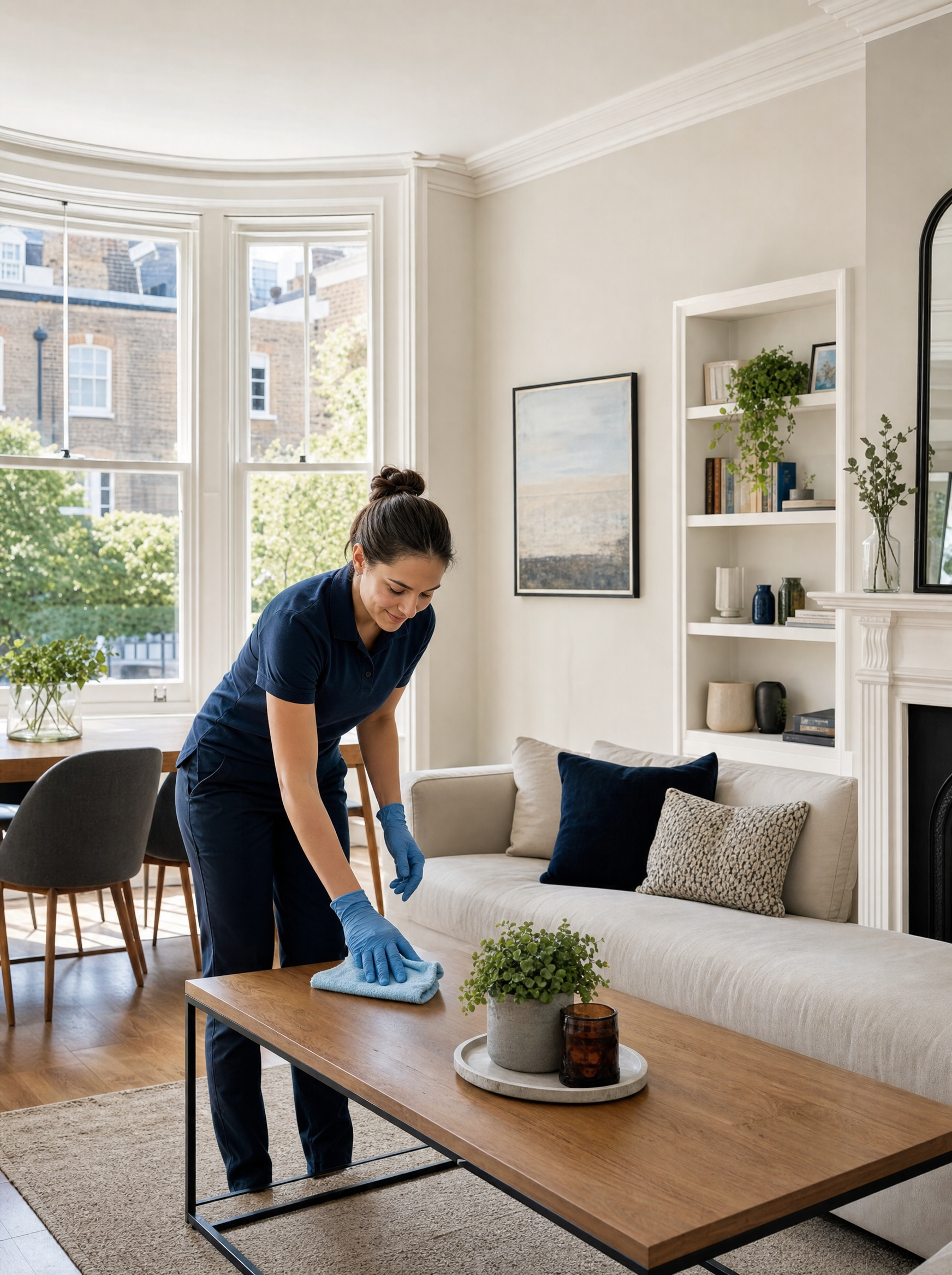
The UK cleaning market is having a strong year, and London sits right at the centre of it. Here is a plain English roundup of the news that actually matters if you want to hire a cleaner or find cleaning work in 2026.
TL;DR: UK cleaner pay is up, the sector just hit record size, and demand for household and short-let cleaning across London is steady all year. Whether you are booking help at home or looking for paid cleaning work, the market is in your favour.
Key facts
- The National Living Wage rose to £12.71 an hour on 1 April 2026, lifting advertised cleaning rates across the country.
- The real Living Wage, paid by voluntary employers, is £13.45 an hour, and £14.80 in London.
- Self-employed domestic cleaners in London typically charge £15 to £25 an hour.
- The UK cleaning, hygiene and waste sector now employs about 1.51 million people, close to 5 percent of the whole workforce.
- Airbnb and short-let turnaround cleans in London usually run £55 to £120 or more per changeover, charged as a flat fee.
Pay is climbing for cleaners
The biggest story is money. The National Living Wage went up to £12.71 an hour on 1 April 2026, and that floor pulls the whole market up with it. Most advertised cleaning roles now sit between that figure and around £14 an hour. Employers who sign up to the voluntary real Living Wage pay more, at £13.45 an hour nationally and £14.80 in London, according to the Southend Cleaners 2026 round-up.
Self-employed cleaners tend to do even better on paper. In London a domestic cleaner commonly charges £15 to £25 an hour, with specialist and deep-clean work fetching more. For anyone thinking about cleaning as a job or a side income, the numbers are healthier than they have been in years.
The sector just set a record
In February 2026 the British Cleaning Council published its latest research report, launched at the Manchester Cleaning Show. It confirmed the cleaning, hygiene and waste industry as one of the UK's top ten sectors, according to the BCC.
The headline figures are big. The industry employs roughly 1.51 million people, up from 1.49 million the year before, which is about 5 percent of the entire UK workforce. The number of businesses operating grew to 78,915 in 2025, as reported by TwinFM. More businesses and more workers means more jobs, and more people who need cleaning done.
Short-let demand keeps London busy
London's rental scene is a cleaning engine on its own. The city has thousands of Airbnb and short-let turnovers every week, with demand clustered in high-turnover areas like Camden, Islington, Shoreditch, Stratford and Clapham. That work is steady and year-round, not seasonal.
Unlike regular home cleaning, short-let turnovers are almost always charged as a fixed fee per changeover. Prices typically start around £60 for a one-bedroom flat and rise to £120 or more for larger properties, per Airbnb Cleaners London. For cleaners, turnovers are a reliable source of repeat bookings. For hosts, a dependable cleaner is the difference between five-star reviews and cancelled stays.
New product rules from 15 August 2026
One to note if you clean professionally. From 15 August 2026, updated chemical labelling requirements mean cleaning products must carry current hazard information and Safety Data Sheets. If you run your own cleaning work, it is worth checking that the products you buy meet the new standard. Green and low-chemical cleaning also continues to grow, with more clients specifically asking for eco-friendly methods, notes Assertio Services.
What this means if you want to hire a cleaner
With rates rising and demand high, good cleaners get booked fast. The smart move is to be clear about what you need, whether that is a weekly home clean, a one-off deep clean, or short-let turnovers, and to post the job so cleaners can come to you. On CQD New Gen you can post a cleaning job for free, with no commission and no posting fees. You describe the work, cleaners in your area respond, and you choose who to hire.
What this means if you want cleaning work
If you are a cleaner, this is a strong market to be in. Pay floors are up, the sector is growing, and London alone has constant demand across homes, offices, end-of-tenancy and short-let work. Setting up a profile and finding clients should be simple and cost you nothing. On CQD New Gen, cleaners keep 100 percent of what they earn, with no commission taken from your jobs.
Whether you are hiring or looking for work, it is free to get started, so there is no reason to wait.
FAQ
How much does a cleaner cost in London in 2026?
A domestic cleaner in London typically charges £15 to £25 an hour, depending on the work and the area. Short-let and Airbnb turnovers are usually a flat fee, often £55 to £120 or more per changeover.
Is it free to post a cleaning job?
Yes. On CQD New Gen posting a cleaning job is completely free, with no commission and no fees to post. You describe the job and interested cleaners get in touch.
How much do cleaners get paid in the UK right now?
The National Living Wage is £12.71 an hour as of April 2026, and most employed cleaning roles pay between that and around £14. Self-employed cleaners in cities like London often charge £15 to £25 an hour.
Is there demand for cleaners in London?
Yes, demand is strong and year-round. The UK cleaning sector employs about 1.51 million people, and London has constant need across homes, offices, end-of-tenancy and short-let turnovers.
How do I find cleaning work near me?
Create a free profile, set your area and the services you offer, and respond to jobs clients post nearby. On CQD New Gen cleaners keep 100 percent of their earnings with no commission taken.