
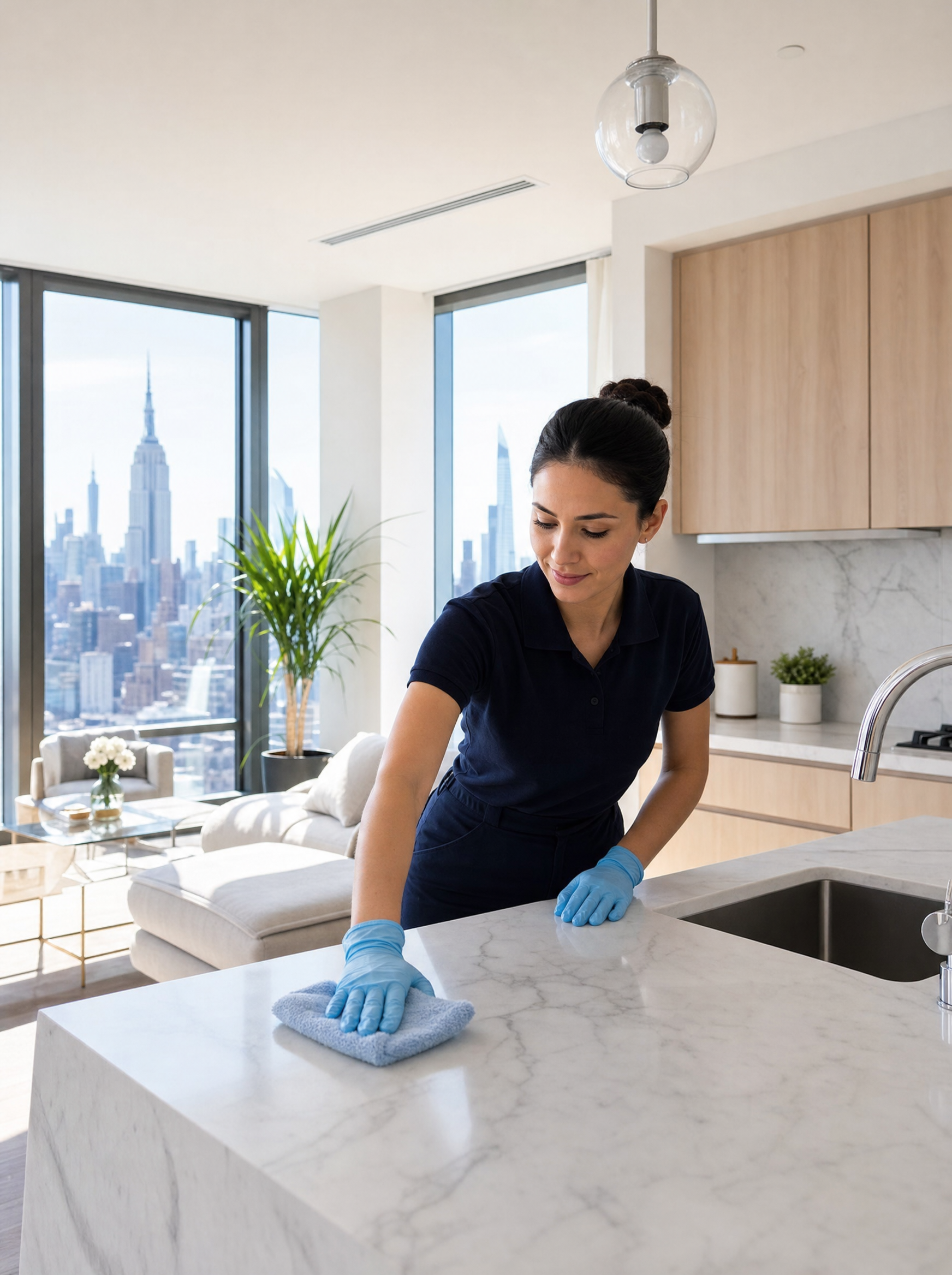
The US cleaning market is running hot in mid-2026: pay is climbing, demand is outpacing supply, and New York remains one of the most expensive — and busiest — markets in the country. Whether you're hiring a cleaner or looking for cleaning work, here's what the latest numbers actually say.
TL;DR: House-cleaner pay in the US is up roughly 8–12% this year to about $21/hour, and 76% of cleaning businesses report they're near full capacity. In New York City that means standard cleans of $120–$280 per visit and hourly rates of $40–$80 — with reliable, vetted cleaners harder to find than ever.
Key facts
- US house cleaner pay is up 8–12% in 2026, averaging around $21.01/hour nationally, per Indeed's 2026 salary data.
- 58% of cleaning business owners report increased demand and 76% say they're near full capacity, according to Jobber's 2026 cleaning industry report.
- 41% of US households now regularly hire professional cleaning services — residential demand is growing faster than commercial.
- New York rates run 15–35% above the national average: standard cleans of $120–$280 per visit, hourly rates of $40–$80, per 2026 NYC pricing guides.
- Labor shortages and turnover remain the industry's biggest headache, per the 2026 Cleaning Labor Outlook.
1. Wages are rising faster than prices
The headline story of 2026 is pay. Cleaner wages have climbed 8–12% over the past year, and the national average now sits around $21 an hour. That's good news if you clean for a living — but industry analysts note that wage inflation actually outpaced ticket-size growth, squeezing margins for operators who didn't raise their prices. Fifty-five percent of business owners have pushed rates up to compensate.
For cleaners, the takeaway is simple: your work is worth more this year, and the businesses that keep good people are the ones paying for reliability.
2. Demand is up, and capacity is tight
Americans are outsourcing housework at record levels. Jobber's data shows 58% of owners reporting more demand and 76% near full capacity — with residential cleaning growing faster than commercial. Busy dual-income households, an ageing population, and the normalisation of recurring cleaning have all fed the trend.
The flip side: if you've tried to book a trusted cleaner recently and found everyone booked out, you're not imagining it. Good, dependable cleaners are genuinely scarce.
3. Labor shortages are the real bottleneck
The single biggest constraint in the US cleaning industry right now isn't demand — it's finding dependable people. The 2026 Cleaning Labor Outlook points to fewer young workers entering hourly service roles, immigration slowdowns, and stubbornly high turnover. That fierce competition for reliable cleaners is exactly why wages keep climbing.
4. New York: expensive, busy, and going green
New York City is a market of its own. Rates sit 15–35% above the national average — standard cleans of $120–$280 per visit, hourly rates of $40–$80, and NYC apartment deep-cleans that can run $150 to $600+. The reasons are structural, not just big-city markup: many buildings require cleaning companies to carry $1–2 million in liability coverage, and street dust, construction and subway grime mean homes need more time to hit the same standard.
The fastest-growing request in 2026? Eco-friendly, non-toxic cleaning — especially from households with kids, pets or allergies.
What it means if you're hiring a cleaner
With capacity tight and good cleaners scarce, the winning move is to reach cleaners directly rather than paying agency middlemen. Be clear about scope (size of home, frequency, eco preferences), and post a job that vetted cleaners can respond to on their terms. On CQD New Gen, posting a cleaning job is free — always, no fees to post — and you connect with real, independent cleaners in your city.
What it means if you clean for a living
Your skills are in higher demand and worth more than they were a year ago. The catch is that agencies and lead-selling platforms take a cut of every job. On CQD New Gen, cleaners keep 100% of what they earn — no commission — on a simple subscription. You find work, set your own terms, and build repeat clients directly.
Whether you're in New York, Los Angeles, Chicago or anywhere across the US, CQD New Gen is the trusted community and home of cleaning — connecting people who need a spotless home with cleaners who take pride in the work.
FAQ
How much does a house cleaner cost in New York City in 2026?
A standard clean typically runs $120–$280 per visit, with most homes near $180. Hourly rates are $40–$80 per cleaner, and larger apartments or deep-cleans can reach $150–$600+ depending on size and depth.
Why are cleaning prices going up in 2026?
Cleaner wages are up 8–12% this year amid labor shortages and high demand — 76% of cleaning businesses are near full capacity. Higher pay for reliable cleaners is the main driver, along with rising insurance and supply costs.
Is it hard to find a reliable cleaner right now?
Yes. With most businesses near capacity and a genuine shortage of dependable workers, trusted cleaners book out fast. Posting a clear job and connecting with independent cleaners directly is the most effective route.
Does it cost anything to post a cleaning job?
No. On CQD New Gen, posting a cleaning job is free — always, with no fees to post. You connect directly with independent cleaners in your city.
How do cleaners earn on CQD New Gen?
Cleaners pay a simple subscription and keep 100% of what they earn — there's no commission taken from any job. You find work, set your own rates and terms, and build repeat clients directly.