
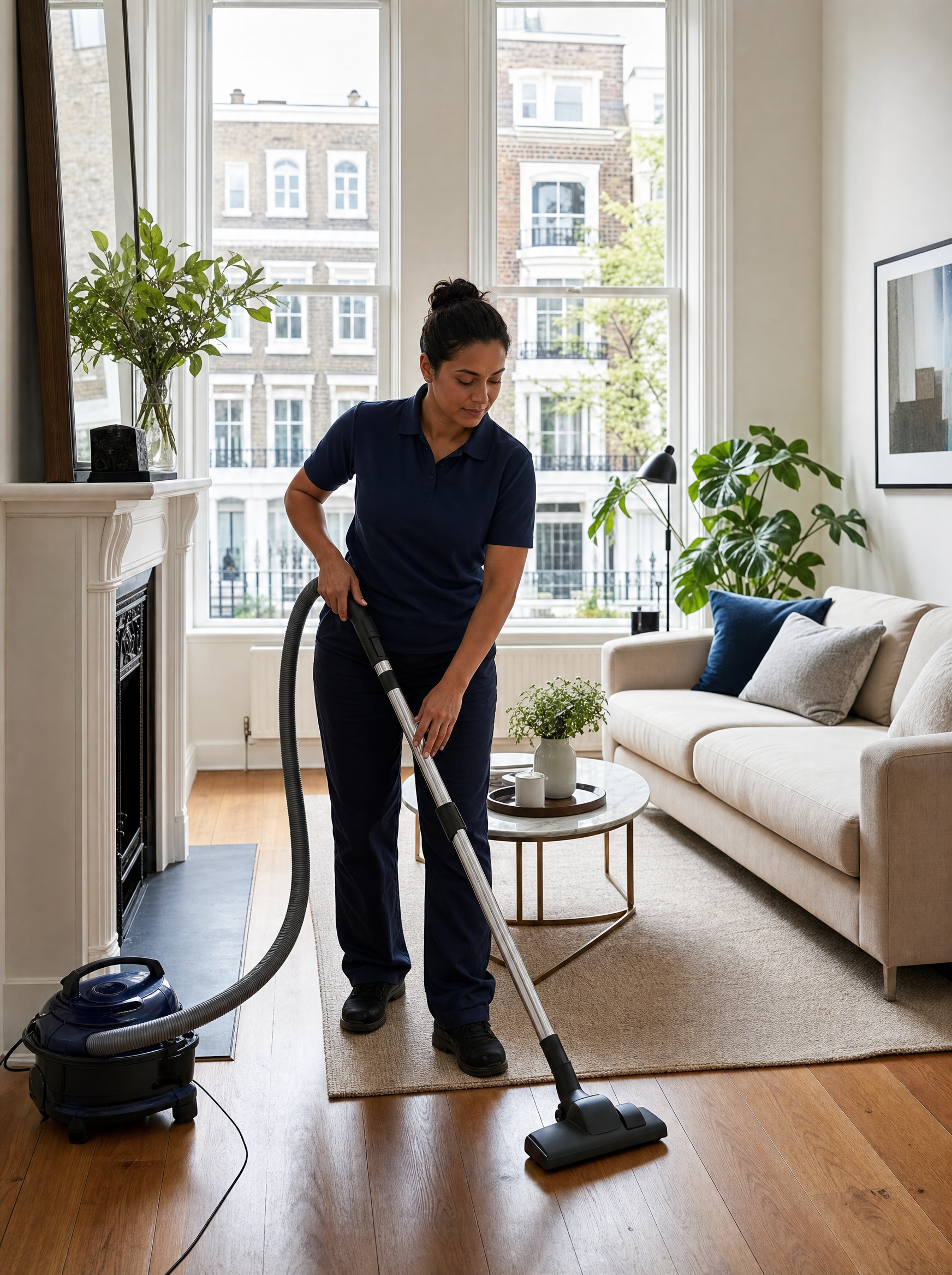
TL;DR: London's cleaning market is busy and better paid in 2026 — the National Living Wage rose to £12.71 an hour in April, London domestic rates now sit around £20–£28 an hour, and the wider UK sector is worth almost £72bn. For clients that means quality help is in demand and worth booking early; for cleaners it means real, well-paid work is out there — and posting or finding it should be free.
Here are the stories actually moving the London cleaning market this year, in plain English, with sources you can check.
Key facts
- National Living Wage rose to £12.71/hour from 1 April 2026 — a 4.1% increase and the largest cash rise in the scheme's history.
- The UK cleaning, hygiene and waste sector is now worth almost £72bn, employing about 1.51 million people — roughly 5% of the UK workforce.
- London runs 25–40% above the national average, with regular housekeeping typically £20–£28/hour in 2026.
- The London Living Wage for 2026 is £13.85/hour, higher than the statutory floor.
- Recruitment is still tight across the industry — good news for cleaners who can command fair rates.
1. The National Living Wage jumped again in April
From 1 April 2026 the National Living Wage increased to £12.71 an hour, up 4.1% from £12.21 and described by the Low Pay Commission as the largest adult-rate rise in the scheme's history. Workers aged 18–20 saw an even bigger jump — up 8.5% to £10.85. More than three million UK workers got a pay rise on the day. Cleaners paid at or near the statutory floor are among the most directly affected, which is nudging hourly rates up across the board. (GOV.UK, 2026)
2. Cleaning is now a top-10 UK industry
The British Cleaning Council's 2026 research report values the cleaning, hygiene and waste sector at almost £72bn, up from £67.7bn in 2022, with 1.51 million people employed — about 5% of everyone working in the UK. That growth has pushed cleaning into the country's top 10 industries by economic contribution. Facilities management makes up nearly 46% of turnover, with domestic and commercial cleaning activities a solid slice of the rest. (British Cleaning Council, March 2026; Facilitate Magazine, Feb 2026)
3. London still commands a premium
London consistently runs 25% to 35% above the national average on pay and prices. Regular housekeeping in the capital costs between £20 and £28 an hour in 2026, against a UK average of roughly £16–£18. The 2026 London Living Wage stands at £13.85/hour, and demand keeps climbing — an ageing population and longer working hours mean more households want help at home, with reports suggesting around 40% of homeowners under 35 now employ a cleaner. London remains the densest cleaning market in the country, with well over 14,000 cleaning businesses operating. (St Anne's Housekeeping, 2026; Assertio Services, 2026)
4. The hiring squeeze is real — and it favours good cleaners
The same reports flag a persistent problem: recruitment shortages. The industry is still recovering from the loss of foreign nationals after Brexit and COVID, and it faces an ageing workforce. For clients that means the best cleaners get booked up fast. For cleaners it means leverage — reliable, well-reviewed people can pick their clients and charge fairly. If you clean in London and aren't fully booked, the demand is there; it's mostly a matter of being findable. (British Cleaning Council, 2026)
What this means if you're hiring a cleaner
Budget realistically — £20–£28/hour is the going rate for a good professional in London, and paying near the bottom of that band gets you better reliability. Book ahead, especially for weekly slots, because good cleaners fill up. And be clear about the job (size of home, frequency, keys/access, supplies) so you get accurate quotes. Posting a cleaning job on CQD New Gen is free — always, with no fees to post — so you can describe what you need and let vetted local cleaners come to you.
What this means if you clean for a living
Rates are rising, demand is strong, and London pays a premium — but you have to be visible. Independent cleaners keep far more of their earnings than agency staff, especially on a platform that takes no commission. List your services, set your own rates, and pick the clients that suit you. If you're new or expanding, this is a good year to be in the trade.
Whether you're hiring or looking for work, the barrier should be low: free to post a job, no commission on your earnings, and a straightforward way to connect local clients and cleaners.
FAQ
How much should I pay a house cleaner in London in 2026?
Expect around £20–£28 an hour for a professional domestic cleaner, higher than the UK average of £16–£18 because London pay and living costs run 25–40% above the national norm. Independent cleaners may sit slightly lower than full agencies.
Is it free to post a cleaning job?
Yes. On CQD New Gen, posting a cleaning job is free — always, with no fees to post. You describe the work and local cleaners respond; there's no charge to list or to receive interest.
Do cleaners pay commission on what they earn?
No. CQD New Gen runs on a simple cleaner subscription rather than per-job commission, so cleaners keep 100% of what they charge their clients.
Why are cleaners in short supply in 2026?
The cleaning workforce is still recovering from the departure of many foreign nationals after Brexit and COVID, alongside an ageing workforce. That's kept demand ahead of supply — good news for reliable cleaners, and a reason for clients to book early.
How do I find cleaning work in London?
List your services where local clients are looking. Set your own rates (£13–£18+/hour is common for vetted independents, more for specialist work), keep your reviews strong, and make yourself easy to find. You can get started free at www.cqdnewgen.ai.