
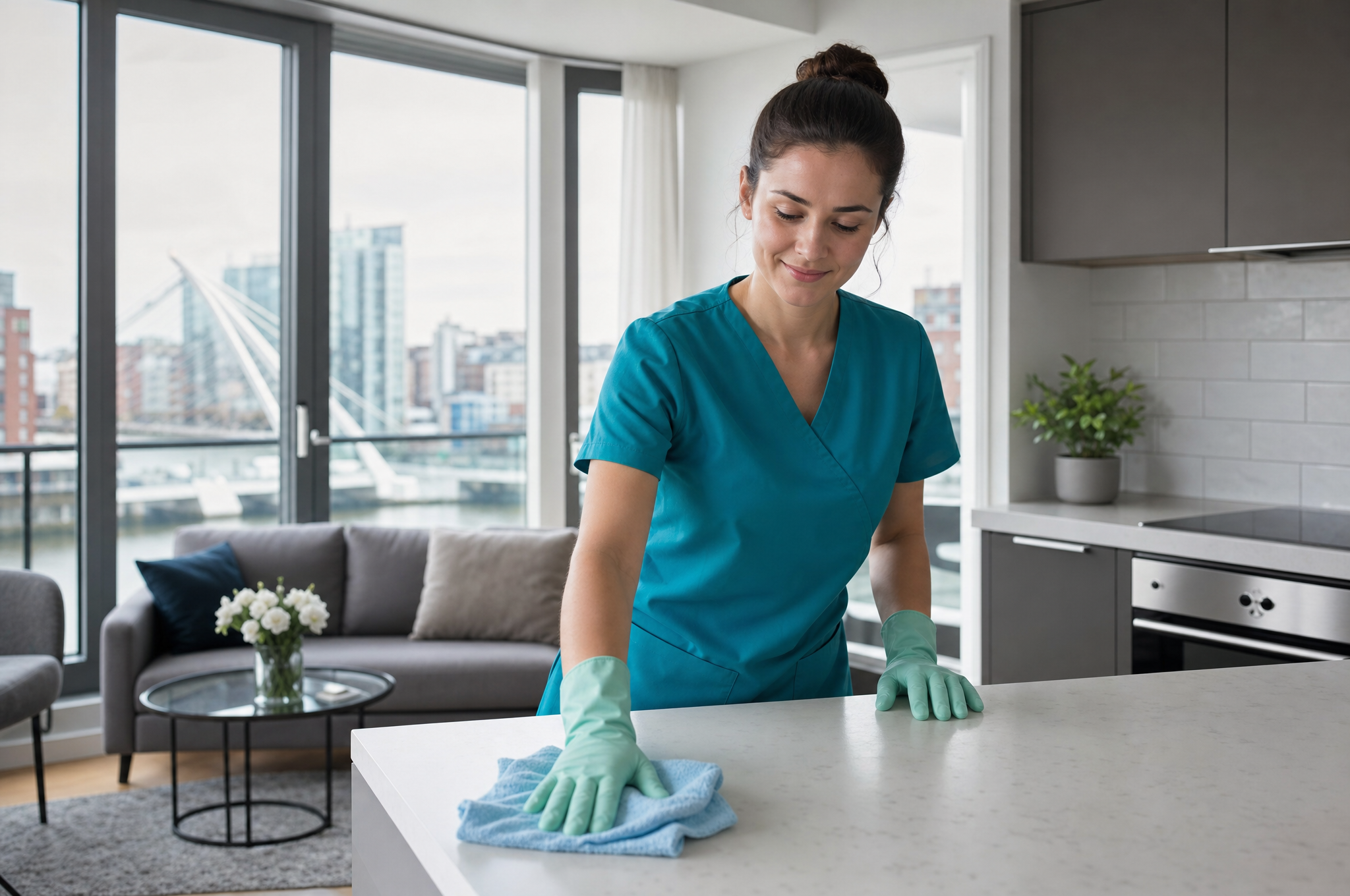
Starting a cleaning business in Ireland in 2026 is one of the fastest, lowest-cost ways to work for yourself. With domestic rates sitting at €25–€35 an hour in Dublin and steady demand from busy households and small offices, a solo cleaner can be earning within weeks — you just need to register correctly, price for profit, and find your first clients.
This guide walks you through the legal setup, realistic pricing, and how to land those early jobs without paying for leads.
Key facts
- Sole trader is the simplest structure. Register as self-employed with Revenue once your net income is above €5,000 (Revenue).
- A business name costs €20 online via the Companies Registration Office if you trade under anything other than your own name (Company Bureau).
- Going rate is €25–€35/hour for professional domestic cleaning, higher in Dublin and Cork (Granny's Cleaning).
- Cleaning services carry 13.5% VAT, but you only register for VAT once you cross the turnover threshold (Optus Glean).
- The national minimum wage is €14.15/hour from January 2026 — useful as a floor if you ever hire (Citizens Information).
Step 1: Register your business
You have two realistic options in Ireland: sole trader or limited company. For a first-time cleaner starting alone, a sole trader is almost always the right call — it is cheaper, faster, and has far less paperwork.
To set up as a sole trader you need to be 18 or over, legally allowed to work here, and hold a PPS Number (PPSN). Then:
- Register as self-employed with Revenue (online through ROS) once your net income passes €5,000.
- If you want to trade as something catchier than your own name — say "SparkleClean Dublin" — register that business name with the CRO using Form RBN1 on CORE.ie. It costs €20 online and must be done within one month of first using the name.
- Keep simple records of income and expenses from day one; you will file a Form 11 self-assessment each year.
Step 2: Sort insurance and the basics
Before your first paid job, get public liability insurance — most clients, and all commercial ones, expect it. It protects you if something is damaged or someone is injured. If you plan to hire, you will also need employer's liability cover.
Your starter kit is genuinely cheap: microfibre cloths, a mop and bucket, a decent vacuum, and eco-friendly all-purpose products. Many recurring clients are happy for you to use their own supplies, which lowers your costs further.
Step 3: Price it properly
This is where most new cleaners undercharge. The market gives you room:
- Independent cleaners typically charge €13–€18/hour, while professional operators with insurance and vetting command €25–€35/hour.
- Dublin and Cork run roughly 10–20% higher than the national average.
- One-off deep cleans (end-of-tenancy, post-renovation) should be priced well above your recurring rate — they are labour-intensive and demand is high.
Don't anchor to the bottom of the range. If you are insured, reliable, and turn up on time, you are a professional service, not a favour. Offer a slightly lower rate for weekly recurring contracts to lock in steady income, and quote premium prices for one-offs.
Step 4: Find your first clients
You do not need to buy leads to get started. The fastest early wins in Ireland come from:
- Local Facebook groups and community "recommendations" pages — post once, respond fast, and ask happy clients to tag you.
- Word of mouth. Tell everyone you know you are taking bookings. Your first five clients almost always come from your own network.
- A simple online profile so people can find and book you. This is exactly where a platform like CQD New Gen helps — you list your services, get discovered by households and small businesses near you, and keep 100% of what you charge.
- Estate agents and landlords for end-of-tenancy work, which is reliable, repeatable, and pays well.
The cleaners who grow fastest treat every job as a referral opportunity: do excellent work, be consistent, and ask for a review each time.
Step 5: Keep clients and grow
Retention beats acquisition. A single weekly client at €30/hour for three hours is over €4,600 a year — landing and keeping ten of those is a full-time living. Be punctual, communicate clearly, and never cut corners on the details people notice (skirting boards, taps, mirrors). Once you are fully booked, that is your signal to raise rates or bring on your first hire.
Ready to get discovered by clients near you and keep every euro you earn? www.cqdnewgen.ai
FAQ
Do I need to register a business to clean houses in Ireland?
You must register as self-employed with Revenue once your net income is above €5,000, and register a business name with the CRO only if you trade under a name other than your own. For most solo cleaners, registering as a sole trader is quick, cheap, and enough to operate legally.
How much should I charge as a cleaner in Ireland in 2026?
Professional domestic cleaners typically charge €25–€35 per hour, with Dublin and Cork at the higher end. Independent cleaners often start around €13–€18, but if you carry insurance and deliver reliable work you can and should price toward the professional range.
Do I need insurance to start a cleaning business?
Yes — public liability insurance is strongly recommended and expected by most clients, especially commercial ones. It covers accidental damage or injury while you work, and if you later hire staff you will also need employer's liability cover.
Do cleaning services charge VAT in Ireland?
Cleaning services are subject to 13.5% VAT, but you only have to register for VAT once your turnover crosses the registration threshold. Below that, most new sole-trader cleaners operate without charging VAT.
How do I get my first cleaning clients without paying for leads?
Start with your own network, local Facebook community groups, and a simple online profile where households can find and book you. Doing consistently great work and asking every client for a review turns your first few jobs into a steady stream of referrals.