
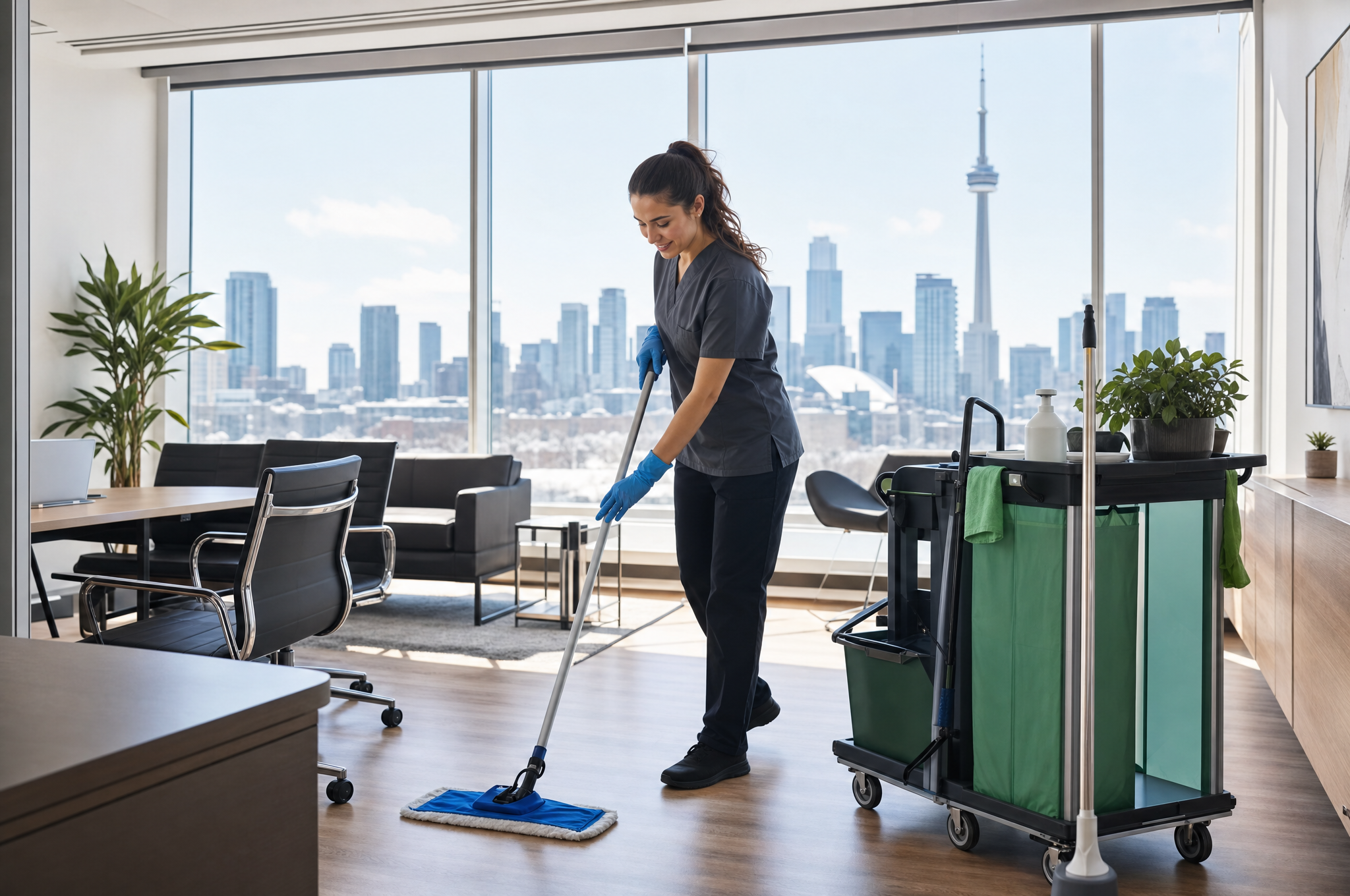
TL;DR: Canada's cleaning industry is growing steadily in 2026 but wrestling with a real labour shortage, pushing operators toward automation and higher-value green services. For independent cleaners, that means genuine demand — and a chance to win work by being reliable, eco-conscious and easy to book.
If you clean homes or offices in Canada, 2026 is shaping up to be a year of opportunity wrapped in a staffing squeeze. Here are the real stories moving the market this year, drawn from published industry analysis and trend reports.
Key facts
- Canada's janitorial services industry is projected to reach roughly $8.9 billion in revenue in 2026, growing about 2.0% year on year.
- The broader Canadian cleaning services market is forecast to grow at around a 7.1% compound annual rate through the early 2030s.
- Cleaning and janitorial work remains a structural labour shortage sector, with high turnover and unemployment below the national average.
- The global cleaning robot market is expected to hit about $21 billion in 2026, growing near 17% a year.
- A large majority of facility managers now say sustainability influences which cleaning contracts they award.
1. The market keeps growing — just not evenly
Industry analysts put Canada's janitorial services revenue at around $8.9 billion for 2026, with modest year-on-year growth of roughly 2%, while the wider cleaning services market is projected to expand at about 7.1% annually into the 2030s. Translation for a solo cleaner: the money is there, but it's spread across residential and commercial work that's increasingly concentrated in growing hubs like Toronto, Mississauga and Cambridge. (IBISWorld, Grand View Research)
2. The labour shortage is the story of the year
Commercial cleaning in Canada faces what analysts describe as a structural labour shortage — businesses are short on staff, turnover is high, and the sector's unemployment rate has sat below the national average for years. Janitorial work is one of the top entry sectors for new immigrants and part-time workers, but keeping good people is hard. (REMI Network, Jobber)
For independent and small-team cleaners this is quietly great news: if larger contractors can't staff jobs, reliable local cleaners who show up and communicate well are in a strong position to pick up clients.
3. Robots move from novelty to line item
Automation is no longer a gimmick. The global cleaning robot market is projected to reach about $21 billion in 2026 and grow near 17% annually, and reports cite large facilities — including some airports — seeing materially lower janitorial costs and fewer slip-and-fall incidents after deploying robotic floor systems. (RobotLab, Jobber)
Robots handle repetitive large-floor work; they don't do detailing, trust or judgement. The practical takeaway is to lean into the high-touch, high-trust work automation can't replace — deep cleans, move-outs, and homes where clients want a human they know.
4. Green cleaning is becoming a buying decision
Sustainability has moved from nice-to-have to deciding factor. Trend reporting indicates a majority of managers now weigh sustainability practices when awarding janitorial contracts, and adoption of green cleaning products has climbed sharply. Canadian customers also show strong appetite for eco-friendly and premium packages. (Jobber, SKYREX)
If you're a cleaner, being able to say "I use eco-friendly, non-toxic products" is now a genuine selling point — and often lets you charge a premium rather than compete on price alone.
What it means for cleaners in Canada
Put the trends together and the 2026 playbook is clear: demand is solid, staffing is tight, and clients will pay more for reliability and green practice. The cleaners who win won't be the cheapest — they'll be the easiest to find, easiest to book, and the ones clients trust to show up. That's exactly why building a direct relationship with clients (instead of renting yourself out through agencies that take a cut) pays off in a tight market.
Want to get found by Canadian clients and keep 100% of what you earn? Post your services or find local cleaning work free at www.cqdnewgen.ai
FAQ
How big is Canada's cleaning industry in 2026?
Canada's janitorial services industry is projected at roughly $8.9 billion in revenue for 2026, growing about 2% year on year. The wider cleaning services market is forecast to grow around 7.1% annually into the early 2030s.
Is there a shortage of cleaners in Canada?
Yes. Analysts describe a structural labour shortage in commercial cleaning, with high turnover and sector unemployment below the national average. That makes reliable, well-organised cleaners especially valuable to clients right now.
Will cleaning robots replace human cleaners?
Unlikely for most work. Robots are growing fast for large repetitive floor cleaning, but they can't handle detailing, judgement, or the trust involved in cleaning someone's home. Human cleaners who focus on high-touch, high-trust jobs remain in demand.
Does green cleaning help me win more work in Canada?
Often, yes. A majority of facility managers now factor sustainability into contract decisions, and many Canadian clients prefer eco-friendly, premium packages. Using non-toxic products can be a real differentiator and support higher rates.
How can I find cleaning clients in Canada without agency fees?
Build a direct relationship with clients so no middleman takes a cut. Platforms like CQD New Gen let cleaners list their services and connect with local clients while keeping 100% of their earnings — post free at www.cqdnewgen.ai.