
TL;DR: From 1 July 2026, Australia's Cleaning Services Award rates rise 4.75% and the national minimum wage crosses $1,000 a week ($26.44/hr) for the first time, while the superannuation guarantee steps up to 12%. For cleaners it means a pay bump; for cleaning businesses it means tighter margins and a hard look at pricing.
The Australian cleaning sector opened the new financial year with its biggest set of wage changes in three years. If you clean for a living or run a cleaning business, the numbers below land in your first July pay run. Here's an honest roundup of what credible industry and government sources are reporting for 2026 — no spin, just what's changing.
Key facts
- The national minimum wage rose to $1,004.90 per week ($26.44/hr) from 1 July 2026 — the first time it has crossed $1,000 a week.
- Cleaning Services Award (MA000022) rates increased 4.75% from the first full pay period on or after 1 July 2026.
- The superannuation guarantee stepped up to 12% from July 2026.
- This year's 4.75% award rise is larger than 2025's 3.50% and 2024's 3.75%, but below 2023's 5.75%.
- Entry-level rates for a worker's first six months must reach at least $978.10/week ($25.74/hr).
1. Minimum wage passes $1,000 a week
The Fair Work Commission's Annual Wage Review lifted the National Minimum Wage to $1,004.90 per week, or $26.44 an hour — the first time it has topped the $1,000 threshold. For award-covered cleaners, all Cleaning Services Award rates rose 4.75% from the first full pay period starting on or after 1 July 2026. If your weekly pay period begins on a Wednesday, the new rates apply from Wednesday 1 July. (Fair Work Ombudsman)
2. Super steps up to 12%
On top of the wage rise, the superannuation guarantee increased to 12% from July 2026. Industry commentary notes the cumulative on-cost impact extends well beyond the headline wage figure — every dollar of base pay now carries a larger super obligation for employers. (INCLEAN)
3. Contract cleaners feel the margin squeeze
Industry publication INCLEAN reports that for contract cleaning businesses employing large numbers of award-covered workers across commercial, industrial and government sites, the compounding effect of successive annual increases is becoming a defining operational challenge. With a 4.75% rise following 3.50% in 2025 and 3.75% in 2024, operators locked into fixed-price contracts are the ones under most pressure. (INCLEAN)
4. Robotics move from novelty to normal
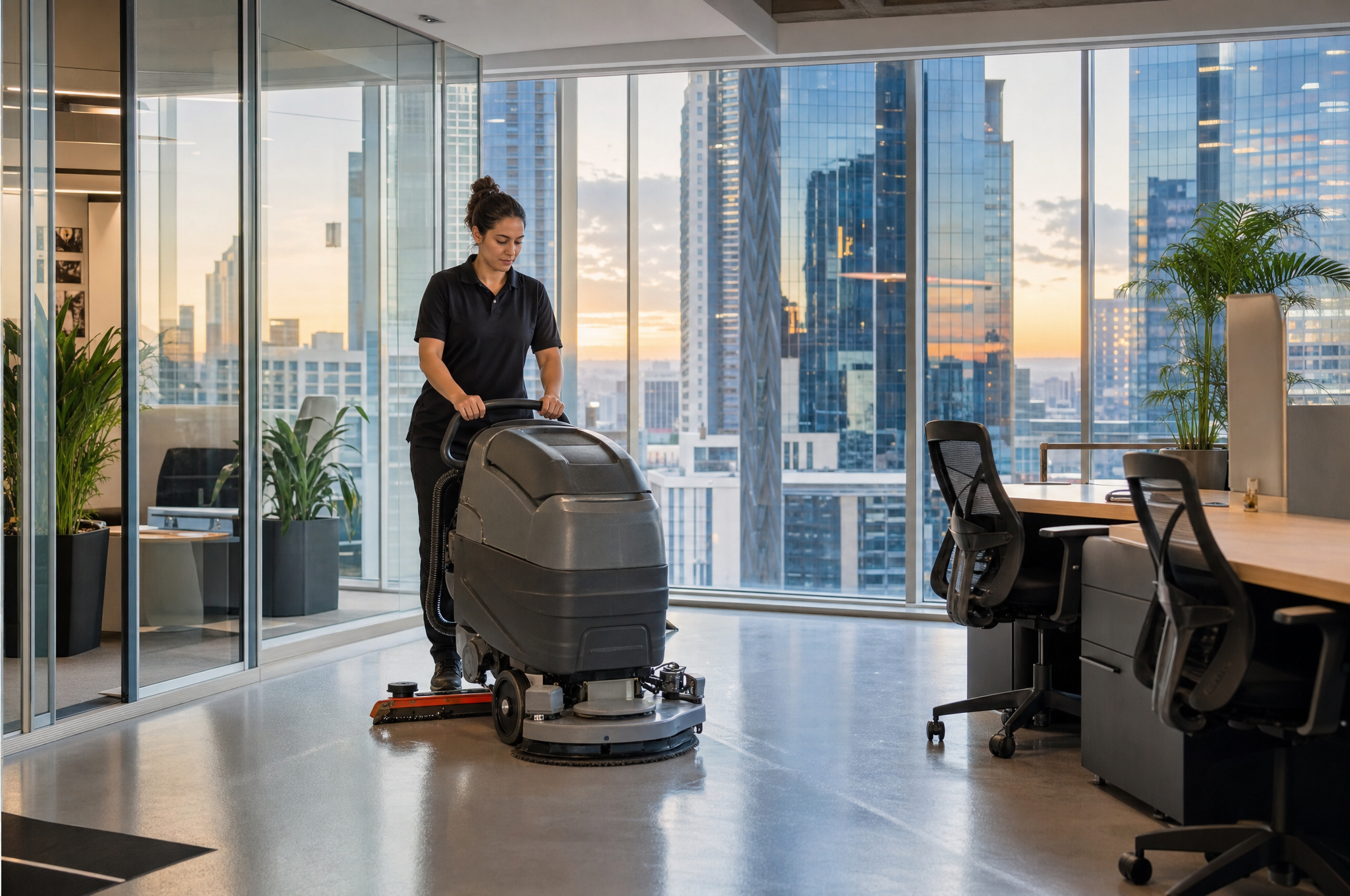
Away from wages, 2026 industry trend reporting points to automation reshaping large sites. Robotic floor scrubbers and autonomous vacuum systems are increasingly described as standard equipment in big commercial facilities and CBD offices, used to offset labour shortages rather than replace cleaners outright. Industry sources also cite roughly 28% annual staff turnover as a key driver of both automation and wage escalation. (Commercial Cleaning AU)
5. Green cleaning becomes contractual
Sustainability is no longer a nice-to-have on premium sites. Reporting on 2026 trends notes that buildings pursuing 5- or 6-star Green Star certification under the Green Building Council of Australia's rating system now treat environmentally responsible cleaning practices as a contractual requirement, with the commercial cleaning market growing an estimated 4–5% a year. (Clean Group)
What this means if you clean for a living
If you're employed under the award, check your first July payslip — the increase should already be in it, and your super line should reflect 12%. If you're an independent cleaner setting your own rates, the award floor is a useful benchmark: it's a strong argument for reviewing what you charge, because your employed peers just got a 4.75% raise while your fuel, products and time cost the same as theirs.
The bigger picture is that demand for reliable, professional cleaners in Australia is holding up — 4–5% market growth, rising standards, and high turnover all mean good cleaners are in short supply. The opportunity is to position yourself as dependable, insured and easy to book, and to keep the full value of your work instead of handing a slice to a middleman.
That's exactly why we built CQD New Gen: a simple subscription so cleaners keep 100% of what they earn — no commission, no lead fees — and clients can find trusted, local help fast. If you're a cleaner in Sydney, Melbourne, Brisbane or anywhere across Australia, you can join free and start getting found.
FAQ
How much did cleaning wages go up in Australia in July 2026?
Cleaning Services Award rates rose 4.75% from the first full pay period on or after 1 July 2026. The national minimum wage increased to $1,004.90 per week, or $26.44 an hour.
When do the new 2026 cleaning award rates apply?
They apply from the first full pay period starting on or after 1 July 2026. If your weekly pay period begins on a Wednesday, the new rates take effect from Wednesday 1 July 2026.
What is the superannuation rate for cleaners in 2026?
The superannuation guarantee increased to 12% from July 2026. That applies on top of the base wage, so employers' total on-costs rose alongside the headline pay increase.
Do independent cleaners have to follow the award rates?
The award sets minimums for employees, not for genuinely self-employed contractors. Even so, many independent cleaners use the award as a pricing benchmark to make sure their rates keep pace with the cost of living.
Is cleaning still a good job in Australia in 2026?
Yes — industry reporting points to 4–5% annual market growth and high staff turnover, meaning reliable cleaners are in demand. Rising award rates also lift the overall pay floor for the sector.